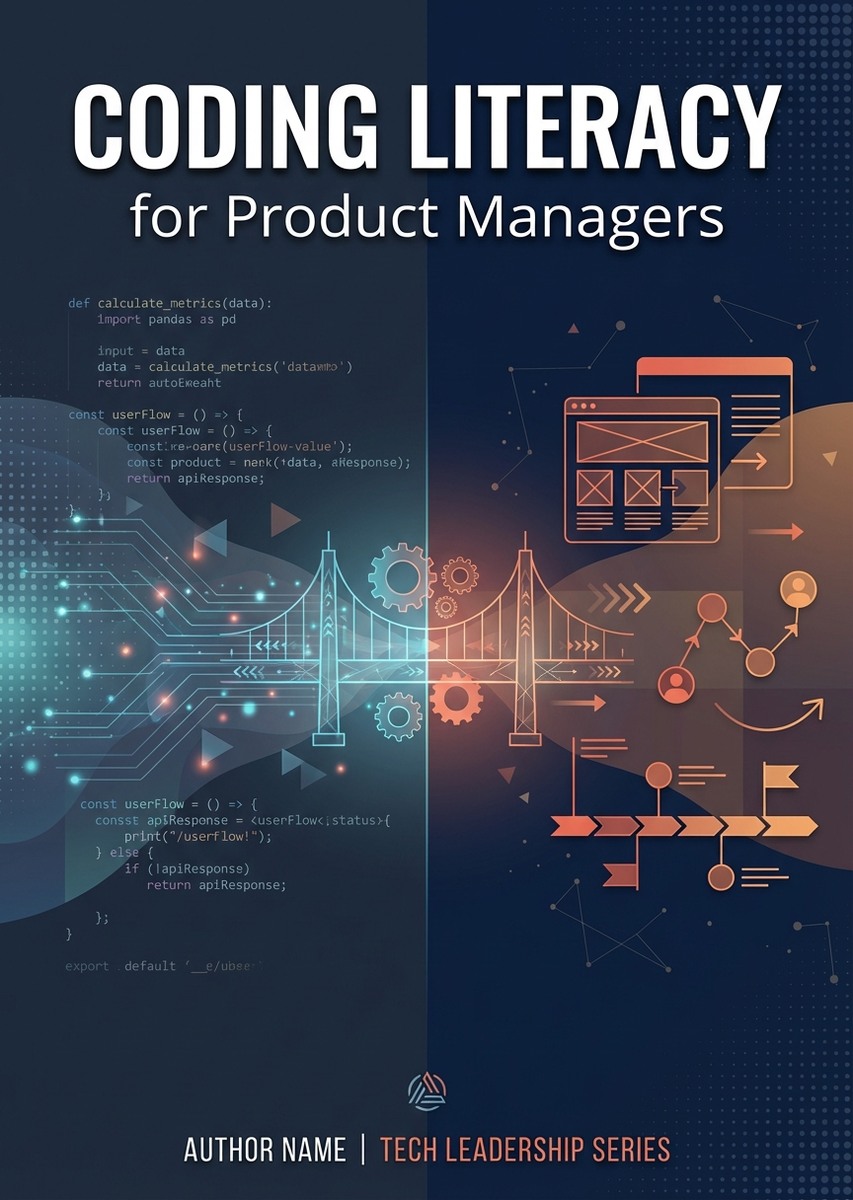
Coding Literacy for PMs
Last revised 9/30/2026

Coding Literacy for PMs

The technical fluency product managers need to lead engineering teams, specify features precisely, and debug what matters

Product managers sit at the intersection of business and engineering, yet most enter the role without a technical background. This collection builds the coding literacy PMs actually need — not to write production code, but to read system architectures, specify data requirements precisely, write clear API integration specs, file actionable bug reports, and communicate with developers in their language. Eight modules move from system architecture fundamentals through web development, databases, APIs, debugging, dev environments, AI task writing, and performance security — each closing with a dedicated 'Key Skills for PMs' section that translates technical concepts into daily PM workflows.

PrimerToolkit
Earn11.55CreditsinProduct DevelopmentDigital Tech
23Modules83Sessions1300Cards362Quizzes

Modules in this Collection’s System

System Architecture: Frontend vs Backend

Where the boundary falls between what the browser does and what the server does

3Sessions

System Architecture: Data Flow

How requests, queries, caches, and real-time connections move data through a system

4Sessions

System Architecture: Key Skills for PMs

Scoping features, specifying data, and estimating performance — the PM's architecture toolkit

3Sessions

Web Development: HTML & CSS Fundamentals

Page structure, element targeting, styling approaches, and responsive design concepts

4Sessions

Web Development: JavaScript Essentials

Events, async operations, frameworks, and browser APIs that power interactive features

4Sessions

Web Development: Key Skills for PMs

Pointing to UI elements, describing interactions, and knowing what browsers can do alone

3Sessions

Database & Data Modeling: Database Concepts

Tables, documents, keys, relationships, and indexes — the building blocks of stored data

4Sessions

Database & Data Modeling: Common Operations

CRUD, filtering, sorting, pagination, joins, and aggregations in practice

4Sessions

Database & Data Modeling: Key Skills for PMs

Describing relationships, specifying filters precisely, and understanding query performance

3Sessions

API Integration: REST API Basics

HTTP methods, request components, response codes, and authentication schemes

4Sessions

API Integration: Third-Party Integrations

Webhooks, rate limits, error handling, and data synchronization across systems

4Sessions

API Integration: Key Skills for PMs

Writing integration requirements, choosing pull vs push, and specifying error scenarios

3Sessions

Debugging: Frontend Issues

Console errors, network failures, rendering problems, and browser compatibility

4Sessions

Debugging: Backend Issues

Server vs client errors, database connections, timeouts, and memory problems

4Sessions

Debugging: Key Skills for PMs

Reproducing bugs, capturing error messages, documenting expected vs actual, and spotting patterns

4Sessions

Dev Environment: Version Control

Git commits, branches, pull requests, code reviews, and deployment pipelines

3Sessions

Dev Environment: Developer Tools

Browser DevTools overview, the Network tab, and the Application tab

3Sessions

Dev Environment: Key Skills for PMs

Referencing code files, understanding deployment stages, and writing better bug reports with DevTools

3Sessions

AI Task Writing: Task Structure

Context, goals, acceptance criteria, and constraints — the four components of a precise AI brief

4Sessions

AI Task Writing: Precision Techniques

Reference files, examples, edge cases, and data format specifications that shape agent output

4Sessions

Performance & Security: Performance Basics

Load times, query optimization, caching strategies, and asset delivery for faster products

4Sessions

Performance & Security: Security Essentials

Input validation, auth patterns, XSS, SQL injection, and API security fundamentals

4Sessions

Performance & Security: Key Skills for PMs

Flagging performance issues, understanding security implications, and weighing feature-performance tradeoffs

3Sessions

What You'll Walk Away With

  • 8technical vocabulary sets for communicating with engineering teams without translation loss
  • 23PM skill frameworks that convert coding concepts into daily product management workflows
  • 4specification templates for data requirements, API integrations, bug reports, and AI task briefs
  • 1debugging decision tree for triaging frontend, backend, database, and performance issues

You'll Have Answers To

  • ?How do I tell whether a feature request needs frontend work, backend work, or both — and why does the answer change my timeline estimate?
  • ?What should a PM's data requirement spec actually contain to prevent rework with engineering?
  • ?When a user reports a bug, what technical information should I capture before filing the ticket?
  • ?What are the real performance and security tradeoffs I need to weigh when prioritizing features?
  • ?How do I write an AI agent task that produces usable output instead of expensive rework?

Critical Concepts Explored

Frontend vs Backend BoundariesAPI Contracts and HTTP MethodsState ManagementCRUD OperationsDatabase Indexes and Query CostWebhooks vs PollingRate Limits and Error HandlingGit Branches and Pull RequestsDeployment PipelinesInput Validation and XSS Prevention
Editor's Note
“The technical fluency course every PM wished existed during onboarding.”

Coding Literacy for PMs fills the specific gap between 'I manage a product' and 'I can communicate precisely with the people who build it.' Eight modules deliver the vocabulary, diagnostic skills, and specification habits that turn ambiguous requirements into actionable engineering work.

Editor's Brief
Who it's for
Product managers, program managers, and technical project leads who work with engineering teams daily but lack formal coding training.
What stands out
This collection does not teach PMs to code — it teaches them to read architectures, specify requirements in engineering-native terms, debug user-reported issues with developer tools, and write AI agent tasks with the precision that produces usable output.
Read if
Read if you have ever filed a feature request that engineering said would take 'way longer than you think' and you could not tell why.
Gold Quotes
The PM who can read a system architecture diagram catches scope creep three sprints before it ships.

When product managers understand frontend-backend boundaries, data flow patterns, and API contracts, they stop writing features that sound simple but require six microservices. Technical literacy is not about writing code — it is about seeing the cost of what you are asking for.


About the Curator
NNew Literacy

New Literacy builds the competences that modern roles demand but traditional education never taught — from coding fluency for non-engineers to data reasoning for decision-makers.