From the industry's shape to your daily practice — the full AI kit for the thinking professional.
AI has become the most powerful — and most misused — tool in the modern knowledge worker's kit. The gap between people who get genuine leverage from it and people who produce slightly faster mediocrity is not about access. It is about orientation.
This bundle is a working library for closing that gap. It starts from the industry itself — because you cannot reason clearly about AI while still confused about what it actually is — and moves outward through daily practice, management, education, and the cognitive disciplines that hold all of it together. Every piece was written with the same editorial standard: no hype, no fear, no prompt-template thinness. Only what is worth reading at length, and what will still be worth reading in a year.
Built for knowledge workers, educators, managers, and professionals who refuse to be left behind by AI and equally refuse to use it badly. Across every collection in the bundle, a single conviction holds: the best results from AI don't come from better tools — they come from better thinking about how to use them.
AI can think for you. The question is whether you still want to.
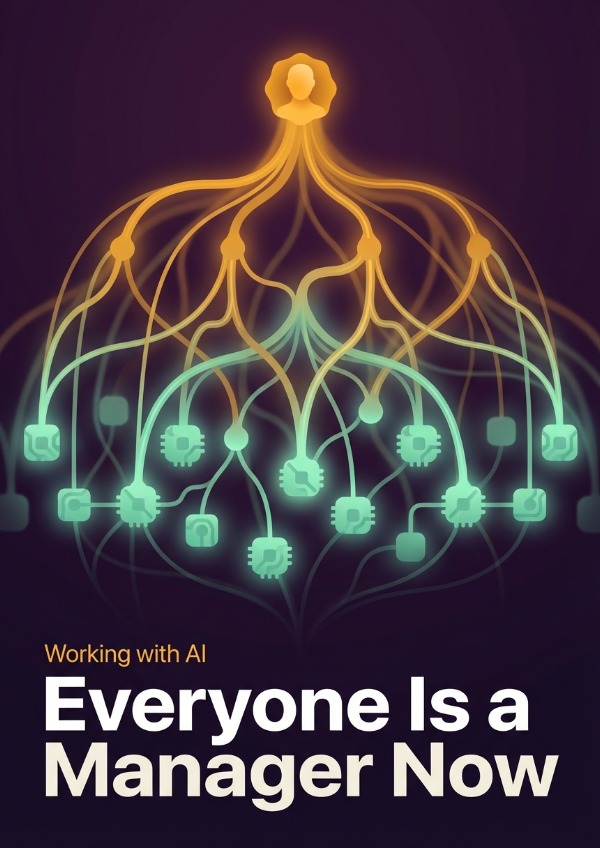
AI didn't just change what students can do. It changed what teaching is for.
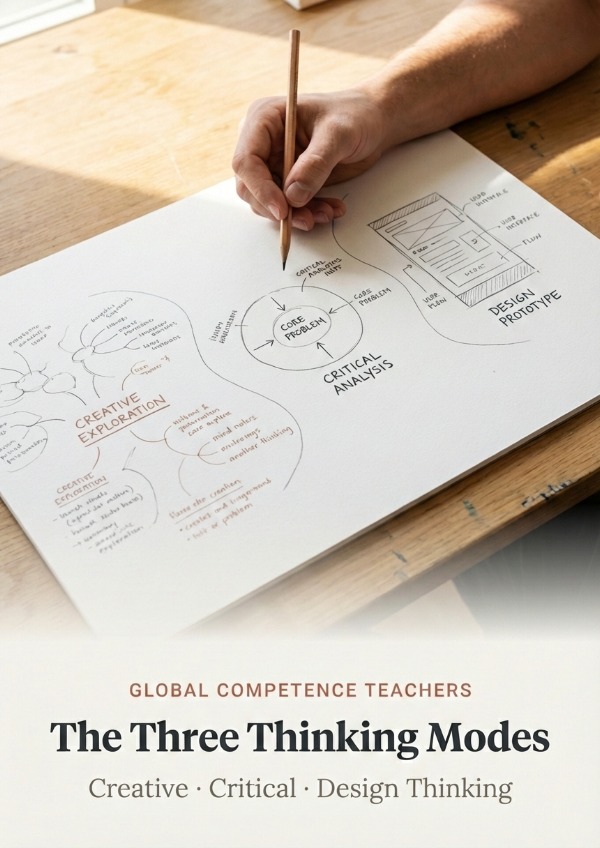
Creative, Critical, Design — and the fourth mode the AI era demands.
For decades, serious thinkers have described three modes of structured thought. Creative — to widen the possibility space before judgment narrows it. Critical — to evaluate, stress-test, and commit. Design — to take the chosen direction into contact with the humans it must actually serve. Each is a discipline. Each has its own failure modes. And none of them do their best work alone — the complete process runs wide, then deep, then real.
The AI era has introduced a fourth mode the first three never needed to name. Not a new variation of critical thinking, but something structurally different — a relational, meta-level discipline about your role in a cognitive partnership with a system that can generate convincing arguments on any side of any question. It is the skill of remaining the author of your own thought when a machine is faster than you at producing one.
Built for anyone who takes thinking seriously enough to train it the way an athlete trains a body. The recommendation: read the classical three first to rebuild the foundations, then the fourth to stay yourself while using them.

AI can think for you. The question is whether you still want to.
For the young person doing the inner work, and the adult guiding them through it.
Self-knowledge is not a destination a young person arrives at. It is a discipline — and it takes frameworks, time, honesty, and usually, someone walking alongside.
What makes this bundle worth reading as a pair is that it holds both sides of that work in mind at once. The inner work of separating the performed self from the authentic one is hard enough on its own. The outer work of guiding someone else through it — without projecting your own answers, without rushing to reassure, without turning facilitation into direction — is harder still. What ties the two together is a single conviction: identity is authored, not discovered. The student learns to write their own. The adult learns the discipline of not writing it for them.
Built for young people ages 16–22 doing genuine self-examination, and for the school counselors, advisors, teachers, and parents accompanying them. The recommendation is simple: if you are the adult in that room, do not hand the student material you have not worked through yourself.

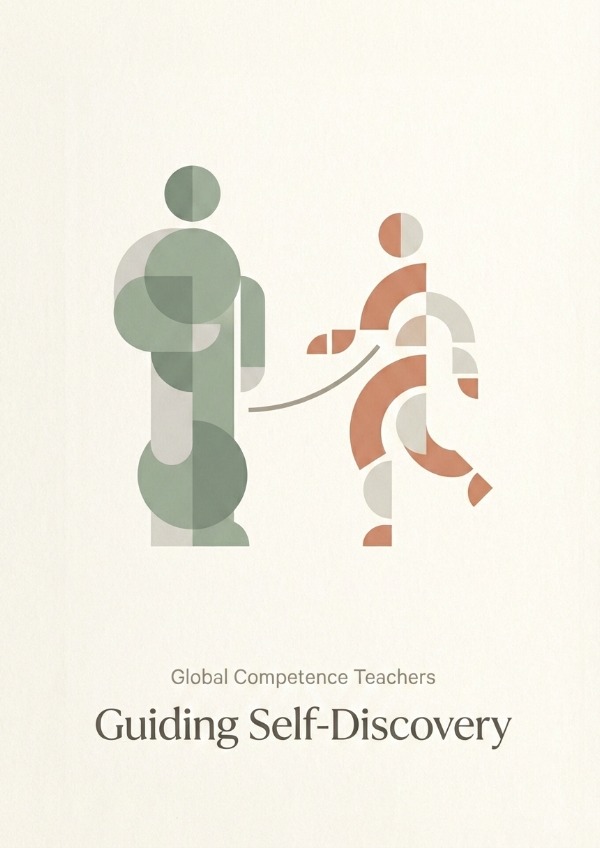
A counselor's framework for guiding — not directing — a young person's self-discovery.
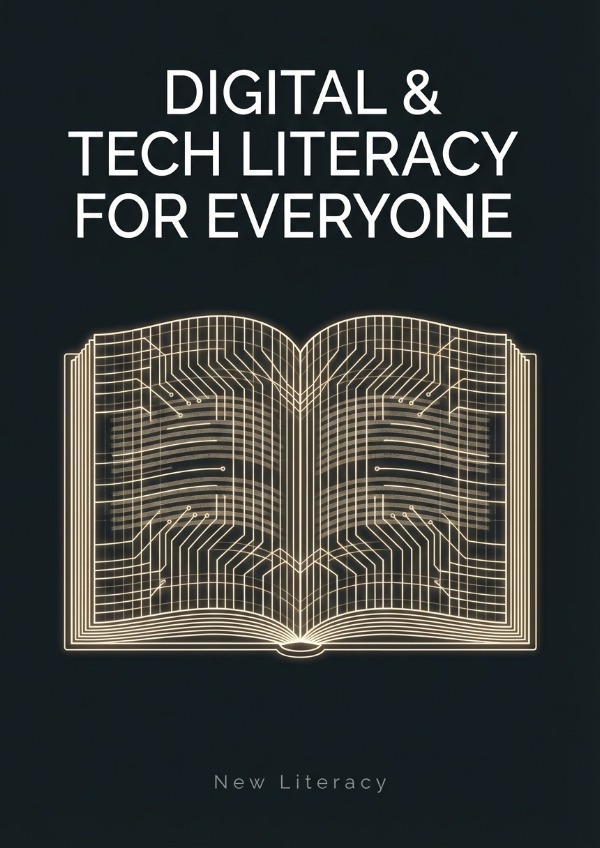
Read the world better.
Some things are worth understanding. Not because someone assigned them — but because they shape how you live, work, and decide. New Literacy is where those things get covered.
The blueprint behind the empire.
How They Built It takes apart the machinery behind the world's most consequential companies — how they found their edge, designed their business model, and scaled it into something durable. Each collection is a deep structural read of one company or one pattern of company-building: the decisions that compounded, the architecture that held, and the bets that shaped an industry. Written for anyone who studies business not for headlines but for the engineering underneath.
Econ Beyond publishes collections on the forces that shape our economic lives, from prices and work to money, cities and nations. Big ideas and real evidence, told plainly, so readers can see the economics in their own decisions at work, at home and at the ballot box.
Better thinking. Better teaching.
Global Competence Teachers is a professional learning curation for educators at every stage of their career. The collections here are practical and substantive, covering the thinking skills and pedagogical challenges that define teaching today. Built for teachers who want to keep growing.
Thousands of years of accumulated knowledge, distilled into thinking tools you can use today.
The Lessons distills humanity's great bodies of knowledge into the few patterns and methods that have survived centuries of testing. Every lesson is presented with its mechanism, where it works, and where it breaks — neither academic survey nor fortune-cookie wisdom. It is written for serious readers who want five thousand years of hard-won thinking at work in the decisions they make now.
Nano College writes university-level courses in short, self-contained pieces designed to be finished — not shelved. Every collection is original: written to cover the ground a full course covers, with the same rigour, in a format that fits the way people actually learn today.
Think like them. Think better.
What if you could borrow the way a great mind thinks — not just what they know, but how they see? Every domain of human excellence has its own cognitive signature. A way of framing problems, weighing evidence, tolerating uncertainty, and making moves that others can't yet imagine. Think Like Great Minds goes inside those signatures — and puts them in your hands.
Move more with less.
How things get done through people, systems, and decisions. The Lever unpacks the real mechanics of management — from leading teams to designing organizations — for anyone who wants to understand how the world's work actually works.
Walk into any room ready.
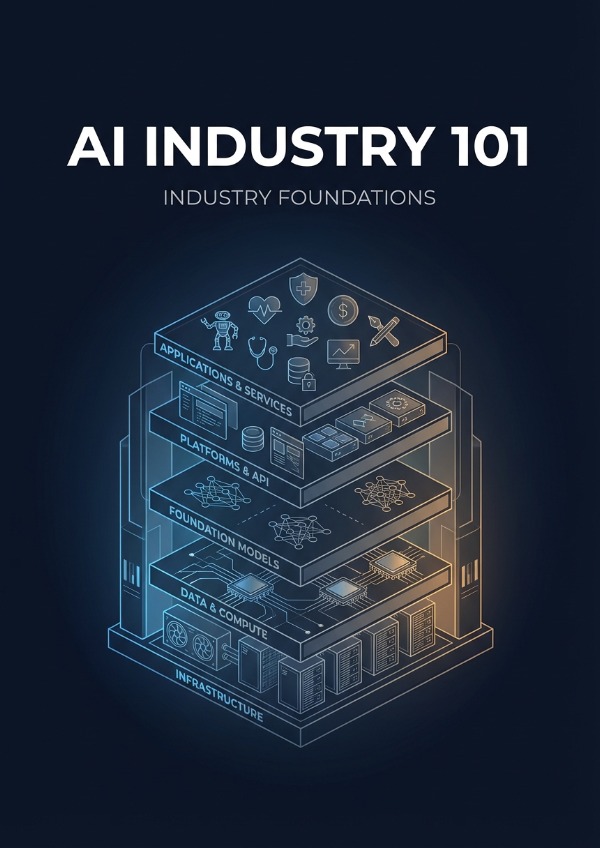
Industry Foundations is a series for curious professionals who refuse to be caught unprepared. Every industry has its own logic — its own language, its own power structures, its own unwritten rules. Most people spend years learning them by accident. This series accelerates that. Each edition gives you an honest, structured walkthrough of one industry: what it does, how it makes money, who matters, and what you actually need to know to speak and think like an insider. Whatever door you're about to walk through, we'll help you walk in ready.
Change the lens, change the decision.
Thinking Paradigms is a LearningFirst channel about the mental frames that shape what people notice and decide. Each collection takes one paradigm — luck, strategic thinking, systems — and turns it from a vague intuition into a skill that can be named, practiced, and taught. Written for professionals, founders, and investors who don't lack information but need a better lens.

Business lessons, product lessons, from the company that turned privacy into a paid product.

What an agent costs to run, how it might earn, and who could capture the value
By Econ Beyond

Free inboxes, business suites, senders, gatekeepers, and the money that keeps email running
By Econ Beyond

Idols, superstars, founders, and collectibles, read as one economic system
By Econ Beyond

Research a topic in depth, build its structure, and publish it for real learners

What the great philosophical traditions figured out that still works as a thinking tool.
By The Lessons

How long/short equity managers turn stock ideas into portfolios, from risk models to leverage
By Nano College

Processors, memory, and parallel machines, designed and measured from the performance equation to AI accelerators
By Nano College

Decision-making under uncertainty, from the discipline with the most honest feedback

Growth, geography, culture, institutions, and strategy, tested against the same country cases
By Econ Beyond

How disagreement works inside organizations, and how to make it do useful work.
By The Lever

Why most organizational changes fail, what the ones that work have in common, and what the research actually says about leading people through transitions.
By The Lever

Who wins, who loses, and why — the competitive dynamics reshaping industries, nations, and careers.

Mental models from history's greatest competitive thinkers — organized by principle, not person

Why organizations fail when they confuse the two — and how to tell which mode you are in.
By The Lever

Evidence-based methods for learning, working, and sustaining cognitive performance — traced to the mechanisms that make them work.

The architecture, operations, and maintenance of the most complex device you operate.

Strategic literacy for a life that lasts — game theory, leverage, risk, career architecture, and meaning across a century