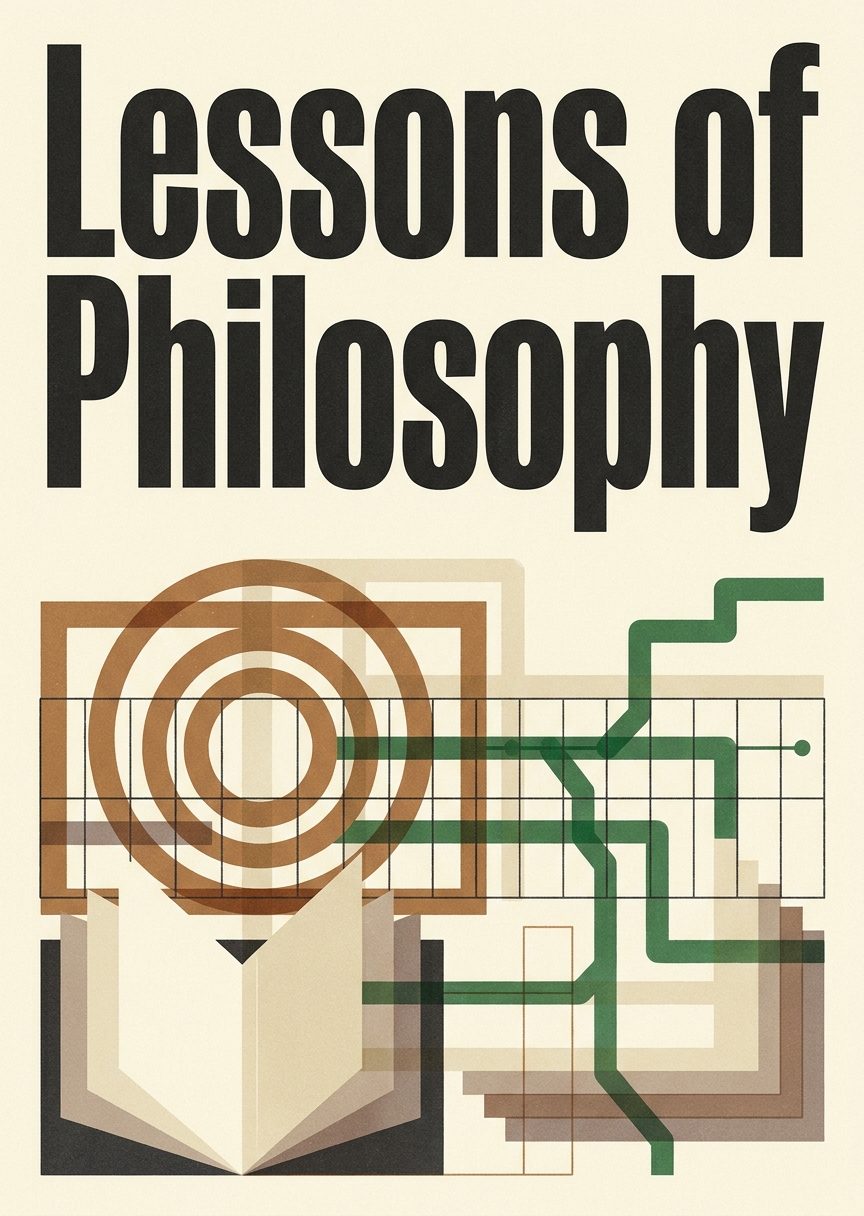
Lessons of Philosophy
Last revised 10/8/2026

Lessons of Philosophy

The philosophical toolkit for thinking, deciding, and living — organised by the problems it solves

Philosophy has a reputation problem. In most schools, it arrives as a timeline of thinkers. Nobody uses it that way. This collection is organised by the problems philosophy actually solves: how to think clearly, how to decide when values conflict, how to live well, how to act when certainty is impossible, and how to navigate a world that technology keeps reshaping.

Framework SurveyField Guide
Earn4CreditsinCritical ThinkingEpistemology
6Modules30Sessions301Cards90Quizzes

Modules in this Collection’s System

Philosophy as Operating System

What philosophy actually does that nothing else does — and why the standard way it gets taught obscures its real value.

5Sessions

How to Think Clearly

Logic, epistemology, and critical reasoning — the philosophical toolkit for not being wrong.

5Sessions

How to Decide and Act

The major ethical frameworks as practical decision tools — consequentialism, deontology, virtue ethics, and when they collide.

5Sessions

How to Live Well

The most durable answers to what makes a good life — from Stoic resilience to existentialist self-creation.

5Sessions

How to Handle Uncertainty

Pragmatism, fallibilism, and productive skepticism — acting well when certainty is impossible.

5Sessions

Philosophy in the Modern World

The philosophical questions that technology, politics, and global systems force us to confront.

5Sessions

What You'll Walk Away With

  • 5philosophical foundations — what philosophy does, why it persists, what it does that science cannot, and how to discover the philosophy you already hold
  • 5thinking tools — logical validity, the fallacy field guide, epistemology, the problem of induction, and the limits of reason
  • 4ethical frameworks as practical decision tools — consequentialism, deontology, virtue ethics, and how to navigate when they collide
  • 5life philosophies evaluated for durability — Stoicism, Epicureanism, existentialism, Confucian ethics, and what they all agree on
  • 5frameworks for uncertainty — skepticism, pragmatism, fallibilism, expected-value reasoning, and living without a map

You'll Have Answers To

  • ?What does philosophy actually do that nothing else does — and why has the standard way it gets taught obscured its real value?
  • ?What makes an argument valid rather than merely persuasive — and how do you evaluate reasoning in political speech, marketing, and everyday life?
  • ?How do the three major ethical frameworks — consequentialism, deontology, virtue ethics — differ in what they recommend, and what do you do when they collide?
  • ?What do Stoicism, Epicureanism, existentialism, and Confucian ethics agree on about what makes a good life?
  • ?How do you act wisely when certainty is impossible — and why is waiting for certainty itself a costly decision?

Critical Concepts Explored

The Socratic MethodLogical ValidityConsequentialismDeontologyVirtue EthicsStoic ResilienceExistentialist FreedomPragmatismFallibilismThe Examined Life
Editor's Note
“The philosophy course organised by the problems it solves, not the centuries it occupied.”

Most philosophy courses are structured by thinker or era, which is how historians study philosophy but not how anyone uses it. This collection is organised by human problems — thinking clearly, deciding under conflict, living well, handling uncertainty — and brings in the philosophers who offered the most durable answers.

Editor's Brief
Who it's for
Students preparing to navigate real decisions — anyone who wants practical philosophical tools rather than a history of ideas.
What stands out
This collection is organised by problem rather than by philosopher, treating philosophy as a toolkit for thinking, deciding, and living rather than a subject to memorise.
Read if
Read if you have ever had to make a decision where the right answer was not obvious, or if you suspect that philosophy might be useful but have never been shown how.
Gold Quotes
Philosophy is an operating system for thinking, deciding, and living — and the reason the major traditions have survived millennia is that the problems they solve are the problems every generation encounters.

What is real? What should I do when the right answer is not obvious? What does a good life actually look like? How do I act when I cannot be certain? These are not academic questions. They are the questions that define adulthood, and the philosophical toolkit for engaging them is the most underutilised intellectual inheritance available.
About the Curator
TThinking Paradigms

Thinking Paradigms maps the major frameworks for thinking, reasoning, and making decisions — giving readers the intellectual tools to engage with complexity rather than retreat from it.