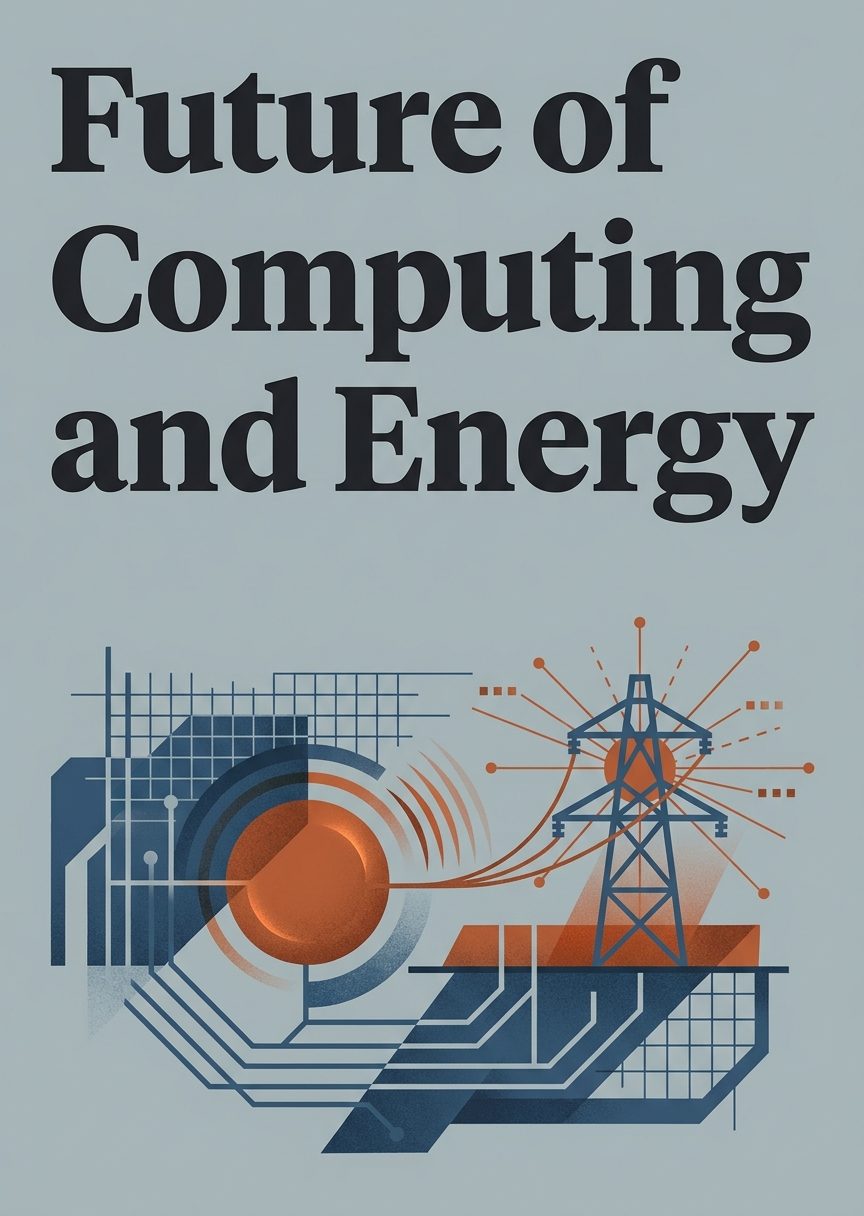
Future of Computing and Energy
Last revised 10/8/2026

Future of Computing and Energy

Two transitions, one system — how computing and energy became inseparable, and what the convergence means for the next thirty years

Computing and energy used to be separate conversations. That separation no longer holds. Training a single large AI model consumes as much electricity as a small city uses in a year. Data centres are the fastest-growing category of electricity demand. Meanwhile, computing is reshaping energy: AI-driven materials discovery, grid optimisation, and reactor simulation are accelerating the energy transition itself. These two domains are now structurally coupled, and understanding either one in isolation produces a distorted picture.

Infrastructure AnalysisTechnology Forecast
Earn4CreditsinInnovationScientific Thinking
6Modules30Sessions298Cards84Quizzes

Modules in this Collection’s System

The Convergence

Why computing and energy became inseparable — the structural coupling that makes it impossible to understand one transition without the other.

5Sessions

The Future of Computing

What computing looks like in ten to thirty years — quantum, neuromorphic, photonic, and edge architectures, and what changes when compute becomes radically different.

5Sessions

The Future of Energy

Advanced nuclear, fusion, next-generation renewables, batteries, and the long shots — where the physics is solved and where the engineering remains unsolved.

5Sessions

The Feedback Loops

How advances in computing unlock energy breakthroughs, and how energy constraints reshape what computing can do — the mechanisms that connect both transitions.

5Sessions

The Bottlenecks

Rare earths, grid infrastructure, permitting, workforce gaps, and supply chain geopolitics — the non-technical constraints that determine pace.

5Sessions

What Changes

Economic geography, geopolitical power shifts, emerging industries, labour markets, and the abundant energy question — what the world looks like on the other side.

5Sessions

What You'll Walk Away With

  • 5convergence sessions — the watt cost of intelligence, data centres as industrial load, computing the energy transition, the efficiency paradox, two transitions as one system
  • 5computing futures — the end of easy scaling, quantum computing, neuromorphic and analog, photonic computing, the architecture zoo
  • 5energy futures — advanced nuclear, fusion, renewables and storage, the battery race, geothermal and hydrogen
  • 5feedback loop sessions — AI for materials discovery, computing the grid, energy constraints on AI, sustainable computing, the acceleration spiral
  • 5bottleneck sessions — rare earths, the grid gap, permitting, workforce gaps, supply chain geopolitics
  • 5consequence sessions — new economic geography, geopolitical power shifts, industries emerging and disappearing, the future of work, the abundant energy question

You'll Have Answers To

  • ?Why have computing and energy become structurally inseparable — and what does the convergence mean for the next thirty years?
  • ?What does the next era of computing look like — quantum, neuromorphic, photonic — and what is demonstrated versus projected?
  • ?Where is the energy transition's physics solved and where are the engineering, economics, and politics still blocking deployment?
  • ?How do advances in computing unlock energy breakthroughs, and how do energy constraints reshape what computing can do?
  • ?What non-technical bottlenecks — permitting, supply chains, workforce — actually determine the pace of both transitions?

Critical Concepts Explored

The Computing-Energy ConvergenceThe Watt Cost of IntelligenceQuantum ComputingAdvanced NuclearThe Battery RaceAI for Materials DiscoveryThe Efficiency ParadoxGrid InfrastructureSupply Chain GeopoliticsThe Abundant Energy Question
Editor's Note
“The infrastructure analysis course that treats computing and energy as a single coupled system rather than two separate conversations.”

Most coverage treats computing and energy separately. This collection maps the structural coupling: how the energy cost of AI constrains computing's future, how computing accelerates the energy transition, and what the feedback loop between them means for the next thirty years of economic geography, geopolitics, and career landscapes.

Editor's Brief
Who it's for
Students preparing for careers in a world where computing and energy infrastructure determine economic geography and geopolitical power — anyone who wants to evaluate competing claims about technology timelines with analytical precision.
What stands out
This collection treats computing and energy as a single coupled system rather than two parallel transitions, mapping the feedback loops that connect them and the non-technical bottlenecks that determine pace.
Read if
Read if you want to understand why data centres are reshaping electricity markets, why the energy transition depends on computing breakthroughs, and what the world looks like when both transitions land together.
Gold Quotes
Computing and energy are now each other's most important input and most important customer — and the feedback loop between them is the structural reality that makes these two transitions a single system.

Training a single large AI model now consumes as much electricity as a small city uses in a year. Data centres are projected to consume 6–9% of total U.S. electricity generation by 2030. Meanwhile, the energy transition itself requires computing: optimising a continental grid with intermittent renewables and distributed storage is a computational problem that could not have been attempted before modern machine learning. Understanding either transition in isolation produces a distorted picture.
About the Curator
IIndustry Foundations

Industry Foundations maps the infrastructure transitions that reshape economies and careers — giving readers the analytical tools to evaluate competing claims about technology timelines and separate signal from noise.