The printing press was a genuine revolution — and within two generations it was commodity hardware.
What endured was not the press but the publishing house: the institution that decided what to print, how to organize it, and how to reach readers.
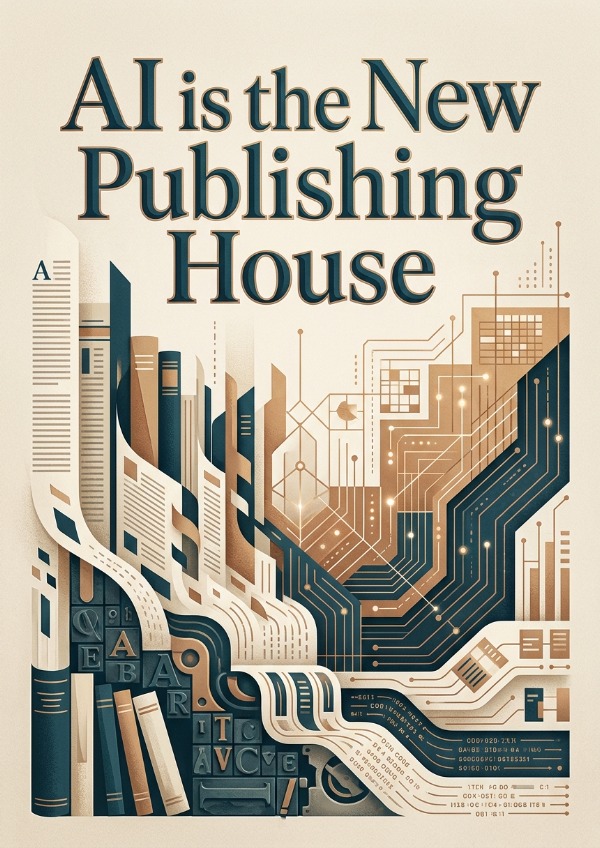
The printing press was the easy part. The publisher is the product.
The AI industry tells its story as an engineering feat — build the model, scale the compute, ship the API. The publishing industry lived the same plot five centuries ago. Gutenberg's press collapsed reproduction costs by orders of magnitude, and within two generations it was commodity hardware. What endured was the publishing house: the institution that decided what to print, how to organize it, and how to reach readers. This collection traces the structural parallel between publishing and AI — not as metaphor, but as an industry-structure comparison. Model training is entering its commodity phase. The competitive axis is shifting to data sourcing, editorial judgment, content packaging, and distribution. These are publishing questions. They have been publishing questions for five hundred years.
The press commoditized. The publishing house endured. The AI industry is at the same inflection.
Content is the product, not the technology — and format is product design, not decoration.
Editorial judgment is the scarce resource — not the reproduction technology.
Where knowledge comes from, what it costs, and why freshness and rights architecture determine industry economics.
One manuscript becomes many products — and genre is market segmentation, not taxonomy.
Whoever controls the distribution layer captures the margin.
The publisher outlasts the press — and the content supply chain is the enduring asset.
“A disciplined structural comparison that reveals why the 'who builds the best model' question has a shelf life.”
The collection treats publishing as the closest structural ancestor of the AI industry and follows the comparison through content sourcing, editorial judgment, formats, and distribution. Its most useful argument concerns the backlist: accumulated training data and post-training recipes outlast any single model release, the way a catalog outlasts any new title.
The printing press was a genuine revolution — and within two generations it was commodity hardware.
What endured was not the press but the publishing house: the institution that decided what to print, how to organize it, and how to reach readers.
AI is the New _____ is a series that uses industry-structure comparisons to reveal what the AI industry is actually becoming. Each collection maps a mature industry onto the AI landscape — not as metaphor, but as structural analysis. The series is for professionals, founders, investors, and strategists who want to see AI through lenses other than engineering benchmarks.
Ranked by semantic similarity
What the Dining Industry's Long History Predicts About Software and Content
Who wins, who loses, and why — the competitive dynamics reshaping industries, nations, and careers.