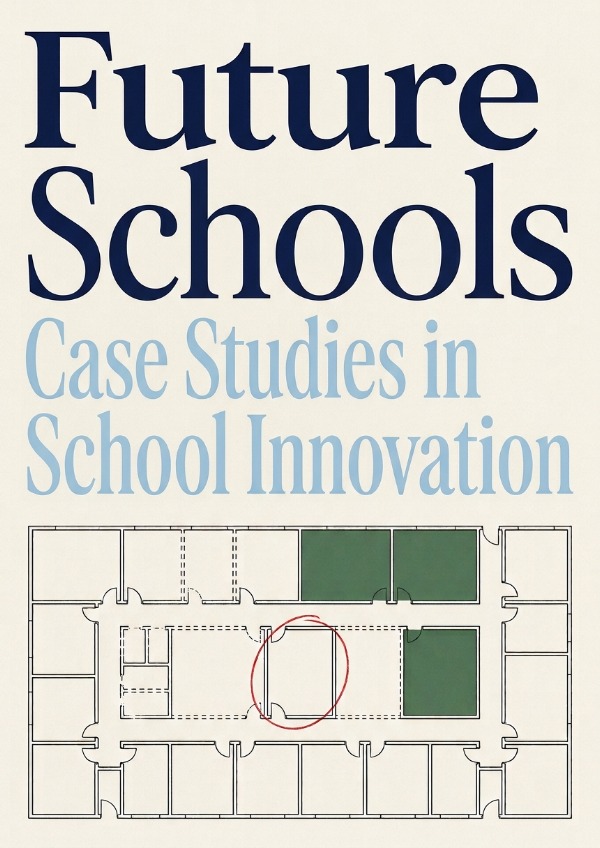
Future Schools: Case Studies in School Innovation
Last revised 9/29/2026

Future Schools: Case Studies in School Innovation

What actually happened when schools, governments and founders redesigned schooling

A casebook of the school innovations of the last fifteen years, from K–12 and national systems to new universities, founded by educators, governments and technologists across four continents. It studies models that have held up, models that collapsed and models whose outcome is still open, from High Tech High and Minerva to AltSchool, Alpha School and South Korea's AI textbooks. Every case separates what a school claims from what has been independently verified, names the cost and the selection of students behind each result, and gives the strongest critique alongside the strengths. It is written for school leaders who are asked to innovate and want to know, before committing budget, staff time and parent trust, what happened when others tried.

CasebookField Guide
Earn5CreditsinEducationInnovation
7Modules33Sessions361Cards98Quizzes

Modules in this Collection’s System

How to Read an Innovative School

The levers every redesign pulls, and how to test an innovation claim before believing it.

4Sessions

New Models That Have Lasted

Schools that have run a new model long enough to judge — and what their record does and does not prove.

3Sessions

Tech-Founder and AI-First Schools

What happens when venture capital, software and speed meet children, parents and teachers.

6Sessions

National Bets

Governments redesigning schooling at scale — mandates, rollouts and reversals.

4Sessions

Rethinking Education After High School

New universities, peer-learning schools, fellowships and academies that challenge the degree.

6Sessions

Where New Models Break

The recurring weaknesses across the cases, analysed side by side.

5Sessions

What Headmasters Can Replicate

What to borrow, what to test first, and what to avoid in an existing school.

5Sessions

What You'll Walk Away With

  • 8levers of school redesign for reading any innovative school, from timetable to funding model
  • 5evidence filters for testing an innovation claim before believing it
  • 4case-lens questions on the bet, the evidence, what broke and what transfers
  • 5recurring failure patterns that appear across tech-founded, national and post-secondary models
  • 5replication moves for piloting, assessing and measuring change inside an existing school

You'll Have Answers To

  • ?Why did AltSchool, backed by some of the richest names in technology, close its campuses within six years?
  • ?How much of an innovative school's headline result comes from who enrols rather than how it teaches?
  • ?Why can a government spend over a trillion won on AI textbooks and reverse course within months?
  • ?When a school removes the teacher, who carries the expertise, the relationship and the accountability?
  • ?What can an ordinary school safely borrow from these experiments, and what should it test first?

Critical Concepts Explored

The eight levers of school redesignRedesign versus rebrandingGrammar of schoolingSelection effectsSurvivorship biasScaling before proofThe evidence gapSchool-within-a-school pilotExit ruleFunding durability
Editor's Note
“A sceptical, fair casebook that reads innovative schools the way an experienced inspector would.”

The collection covers durable models, collapses and cases still in progress across four continents, and holds every one to the same test: what was changed, what the independent evidence shows, who the model serves and what an ordinary school could borrow. It praises only what the record supports.

Editor's Brief
Who it's for
Headmasters, principals, deputy heads, curriculum leaders and ambitious teachers, especially in international and private secondary schools, who are being asked to innovate.
What stands out
Each case separates self-reported results from independent evidence, states the tuition and selection behind the figures, and treats closures and reversals as the most informative data in the set.
Read if
Read it if you want to know what actually happened to the schools in the headlines before you commit budget, staff time and parent trust to a redesign of your own.
Gold Quotes
Innovative schools rarely fail because the idea was bold. They fail because of which levers moved together, how fast, and on what evidence.

Time, space, grouping, curriculum, assessment, the teacher's role, technology and funding are the levers every redesign pulls. Models that last tend to move a few of them in sequence and measure as they go; models that collapse tend to move many at once and scale before the results are in.
About the Curator
GGlobal Competence Teachers

Global Competence Teachers is a LearningFirst editorial line for educators who treat their classroom craft as a serious professional discipline. The collections are written for teachers who want pedagogical depth — not pep talks, not buzzword tours, not certification exercises — and who care about the method as much as the message.