The Psychology Around AI
Last revised 9/28/2026

The Psychology Around AI

Fear, hope, trust and meaning: why minds react to AI the way they do

AI changes how people work, and it also changes how people see themselves, because it imitates the thing humans have long used to define themselves: the mind. This collection maps the full range of human responses to AI, from dread and resistance to enthusiasm, over-reliance, overwork, comparison and attachment. Each response is treated as an understandable psychological pattern with a research base, drawing on terror management theory, algorithm aversion, automation bias, self-determination theory, the ELIZA effect and more. The result is a set of names and explanations for feelings many people have already had, and a steadier way to hold them.
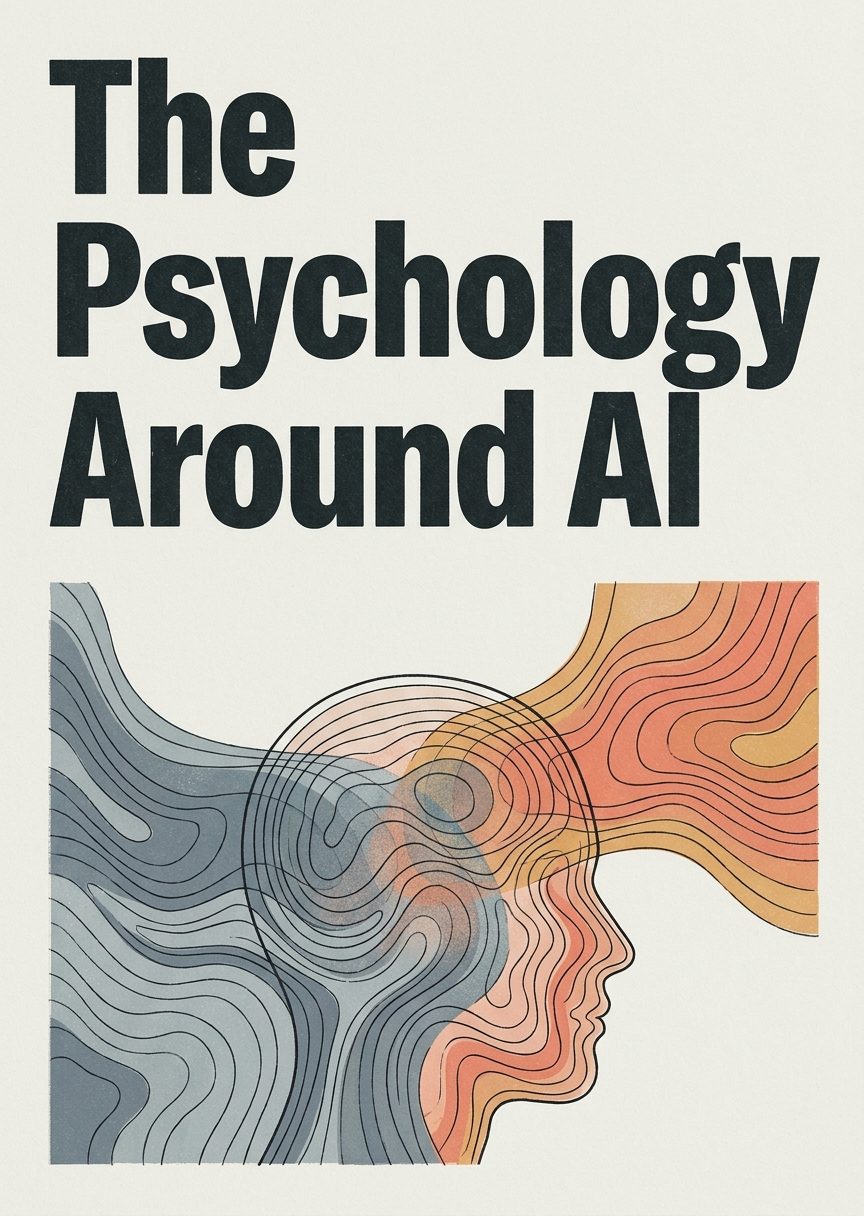
Field GuideReframe
Earn4CreditsinPsychologyArtificial Intelligence
8Modules32Sessions340Cards96Quizzes

Modules in this Collection’s System

A Mind Meets a Thinking Machine

Why AI draws a stronger reaction than any tool before it.

4Sessions

The Psychology of Threat

Fear, dread and resistance, and what each one protects.

4Sessions

The Psychology of Hope

Optimism, excitement and the pull of the gold rush.

4Sessions

Trust, Reliance and Blame

How much people believe the machine, and why it is rarely the right amount.

4Sessions

The Pace Trap

Why the time-saving machine can leave people more exhausted.

4Sessions

Competing and Comparing

What happens when the benchmark is no longer human.

4Sessions

Identity, Meaning and Human Value

What still feels like one's own when a machine can do much of the work.

4Sessions

Connection, Companionship and the Adaptive Mind

Relationships with AI, relationships through AI, and a healthy stance toward both.

4Sessions

What You'll Walk Away With

  • 8named psychological mechanisms behind the strongest reactions to AI, from terror management to the ELIZA effect.
  • 4trust calibration lenses for noticing when reliance on a machine runs too high or too low.
  • 3pace traps that turn time saved by AI into more pressure, and the research on recovery that counters them.
  • 3basic needs from self-determination theory for telling energising AI use from hollow use.

You'll Have Answers To

  • ?Why does AI provoke stronger feelings than any tool before it?
  • ?Why can a machine that saves time leave people more exhausted than before?
  • ?Why do people distrust an algorithm after one error, yet accept confident AI output without checking?
  • ?What gives human effort meaning when a machine can do much of the work?
  • ?How can someone feel dread and excitement about AI on the same day, and which feeling is right?

Critical Concepts Explored

Knightian uncertaintyTerror management theoryExpert identity threatAlgorithm aversion and appreciationAutomation biasELIZA effectMoral crumple zoneIdle-machine guiltSelf-determination theoryPsychological flexibility
Editor's Note
“A careful, evidence-led map of how human minds are meeting AI.”

The collection connects decades of research, from terror management to automation bias and self-determination theory, to the reactions people are having now. It treats fear and enthusiasm with equal respect, flags where evidence on AI is still early, and ends on integration rather than on picking a side.

Editor's Brief
Who it's for
Professionals, students, managers, educators and parents who live with AI daily and have noticed strong feelings about it in themselves or others.
What stands out
It explains reactions to AI through established psychology, giving dread, resistance, enthusiasm, over-reliance and indifference the same careful, respectful treatment.
Read if
Read it if you want to understand why AI makes people feel the way they do, rather than be told to adapt.
Gold Quotes
The technology is new. The minds meeting it are not.

Panic, hype, mind-detection and identity threat are old patterns. AI is unusual because it triggers all of them at once, which is why established psychology explains so much of the present reaction.

About the Curator
PPsychology Digest

Psychology Digest publishes collections on the human mind: why we think, feel, remember and behave the way we do. Grounded in real science, each one helps readers understand themselves and others, and put that understanding to work in their relationships, choices and everyday lives.